Case study · ED & inpatient telepsychiatry
Broadlawns Medical Center cut psychiatric placement from two days to six hours.
Telepsychiatry coverage started in the emergency department and grew into the 44-bed inpatient unit. Here is what changed, and what it took.

Before
The problem they came with
Broadlawns runs a comprehensive behavioral health program: an outpatient clinic, behavioral health urgent care, and a 44-bed inpatient unit. The demand for psychiatric care is immense, and key inpatient psychiatry positions had gone unfilled for over a year.
Behavioral health patients often waited 24 to 48 hours in the emergency department for placement into a treatment facility, and the high-volume inpatient unit needed more provider support to hold its standard of care.
There was one more obstacle, and it was cultural rather than operational: some team members were initially skeptical about how telepsychiatry would integrate into inpatient care.
We didn't have to commit to a certain amount of money or time. ... It's absolutely worth trying.
The decision
Why they chose a partner over a hire
Recruiting had been open for over a year. The comparison that mattered was practical.
| Direct hire | Locum coverage | Shared coverage | |
|---|---|---|---|
| Cost basis | Full salary and benefits, regardless of volume | Hourly, at a premium multiple | No fixed money or time commitment |
| Coverage hours | One schedule, gaps on nights and weekends | Whatever is booked, subject to availability | 24/7, including the 2am presentations |
| Continuity | Strong while filled. Key roles sat open for over a year | New provider most rotations | Same clinical team, ongoing |
| Who owns placement | Shared with nursing in practice | Nursing | A coordinator, not the nurse on shift |
| Credentialing burden | Hospital | Hospital, repeatedly | Handled by the partner |
The program
What went live, and when
-
ED & urgent care consults
Coverage began where the pressure was highest: supplementing psychiatry consults in the ED and urgent care.
-
First inpatient psychiatrist
Dr. Joan James earned staff and patient trust quickly, through communication and compassionate care over telehealth.
-
The team expands
Psychiatric nurse practitioner Molly Saucer joined, solidifying the inpatient role.
-
Full inpatient support
Up to 15 inpatient psychiatric consults a day.
Broadlawns first sought this as a short-term fix. It is now an ongoing strategy, kept in place even as the hospital hires for its own full-time roles.
Results
What changed in the first year
Each figure measured against the 12 months before launch, using the hospital's own records.
Department outcomes
- 4-6h
- ED placement time, down from 24-48 hours
- ~1 day
- shorter inpatient length of stay
- 15/day
- inpatient psychiatric consults supported
Results
- No rise
- in readmissions alongside the shorter stays
- Within 1 week
- initial staff skepticism shifted to support
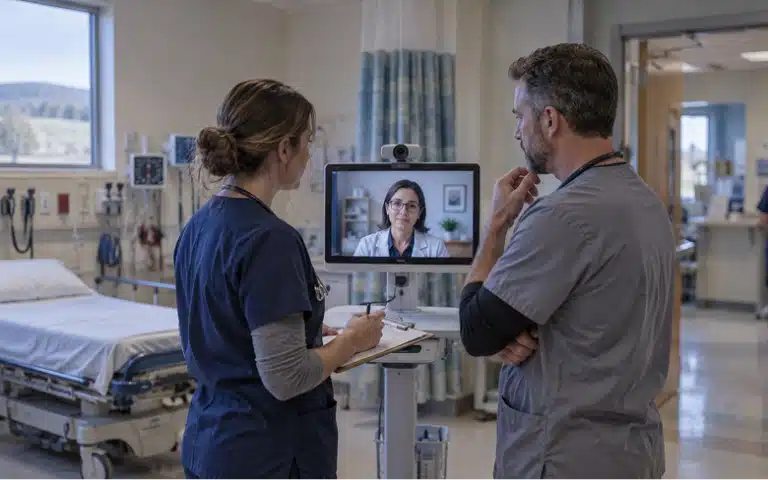
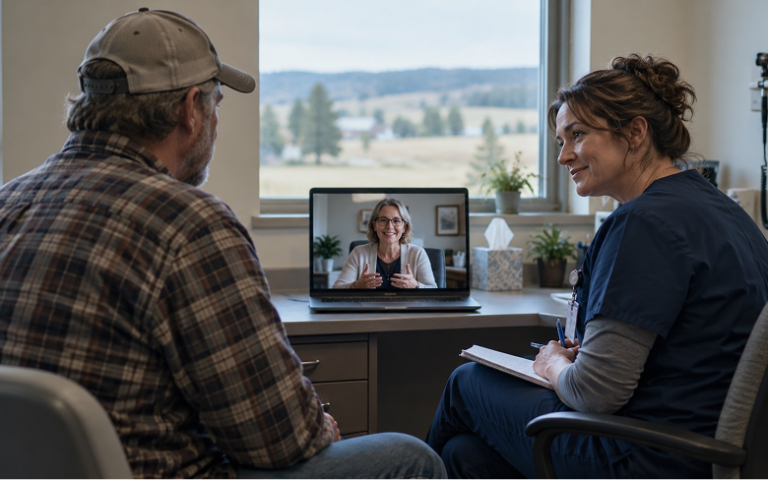
Providers work over iPads at the bedside, with on-site staff supporting the interaction and documentation. The extra coverage also lets the in-house psychiatric team take needed time off without overburdening whoever remains.
Transferable
What this means for a similar facility
If your hospital is struggling with psychiatric recruitment, lengthy ED placement times, or coverage gaps, PMC can help you evaluate whether this model fits your needs.
Credentialing timelines vary by state, and the financial model depends on your hospital’s patient volume and coverage needs.
Reach out to see what this model could look like for your hospital.