Case study · Outpatient psychiatry, FQHC
Community Alliance filled a psychiatry gap without a hire.
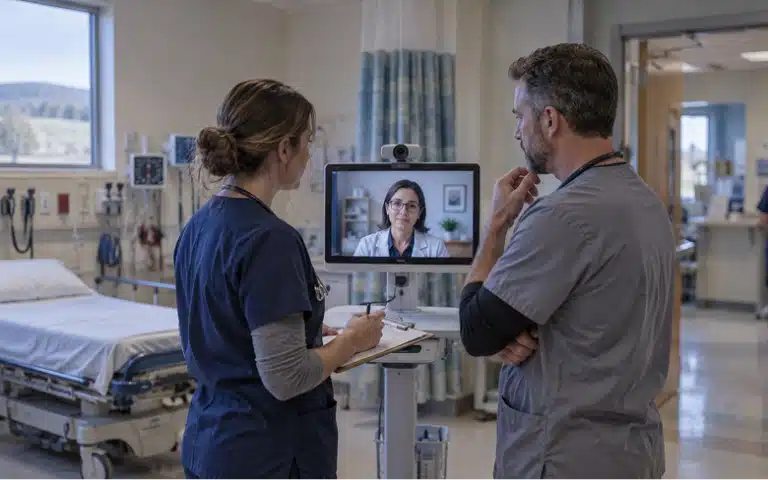
An Omaha health center lost a mental health provider just as caseloads climbed during the pandemic. PMC placed a telehealth psychiatric nurse practitioner and restored coverage within weeks, with hours that expanded as utilization grew.

Before
The gap that could not wait
Research on delayed access is unsparing: as many as 50% of people who need mental health services and encounter a wait list never enter treatment. Community Alliance built its outpatient model in Omaha around that figure, with access speed as the core operational priority.
When a mental health provider left the organization at the start of the COVID pandemic, caseloads were already climbing across every age group. For a small outpatient provider, one departure removes coverage for every patient in the queue.
It was a critical time for us. We are still a fairly small outpatient provider. When you have a small office like we do and one person leaves, it really creates a wide gap in services. We felt that, especially with covid going on, the most efficient way to fill that gap was to go with telehealth.
The decision
Why telehealth, and why then
A recruitment process would have taken months the caseload did not have. Community Alliance came to PMC with a specific situation: a departing provider, climbing demand across every age group, and a pandemic that made in-person recruitment slow and in-person care uncertain. The question was not whether to replace the provider but how to restore coverage without a gap in care.
A telehealth psychiatric nurse practitioner could start without relocation or a credentialing delay and begin seeing participants within the first week. Hours could expand as the calendar filled, which mattered because Community Alliance was pursuing visibility and wait time reduction simultaneously. The more people learned services were available, the faster that calendar would move.
The program
What went live, and when
-
A gap opens, mid-pandemic
A mental health provider leaves as caseloads climb. Community Alliance approaches PMC to cover the gap by telehealth.
-
One nurse practitioner, by telehealth
The partnership begins. PMC’s psychiatric nurse practitioner meets participants and integrated with the clinical team.
-
Nearly a full-time provider
Slots fill quickly. The nurse practitioner is utilizing 30 or more hours a week, close to a full-time equivalent.
-
Capacity grows on both sides
Psychiatric and therapy capacity, on site and by telehealth, continue to expand.
What began as a stopgap became part of the operating model: Community Alliance kept the telehealth provider as it added on-site capacity, and started construction of a new headquarters.
Results
What changed
Community Alliance’s own reporting for the first full year at expanded capacity.
Participant outcomes
- 80%
- of participants in outpatient psychiatric treatment and counseling reported improved or alleviated symptoms after six months
- 70%
- shorter delays to a first appointment, across program areas including psychiatric services
Organization outcomes
- 13%
- increase in people enrolled in mental health treatment, rehabilitation, recovery or primary care.
- 1,386
- more people received one-time assistance
- 30+ h
- of PMC nurse practitioner time a week, nearly the equivalent of a full-time provider
Honestly, [PMC] has given us increased capacity to serve our community. We have a really nice balance and just expanded in-person services in March. We’re feeling good about our growth.
Transferable
What this looks like for your organization
If a provider departure would leave a gap your recruitment timeline can’t fill, PMC can help you evaluate a telehealth coverage model that fits your needs. Providers can begin seeing patients within the first week, integrate with your existing clinical team, and scale hours as demand grows.
Community Alliance reached 30+ provider hours per week as utilization increased. Most organizations find that demand was already present in their community; what was missing was consistent coverage.